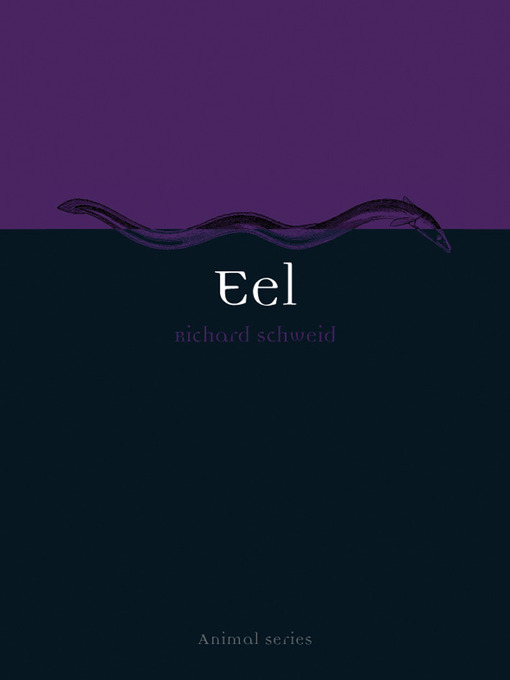
Although it might seem the most mundane of fish when pulled from the mud of creeks, ponds, rivers or the sea, the eel's life cycle is one of the most remarkable on the planet. Freshwater eels are born, according to current scientific theory, in remote ocean depths, and journey thousands of miles to fresh water where they spend their lives, before returning to the ocean to mate and die. A favourite food for humans since antiquity, feeding London's poor during the Middle Ages, and saving the Mayflower pilgrims from starvation on North America's shore, these days the Japanese alone account for an eel consumption worth over a billion pounds a year.
Richard Schweid chronicles these creatures in all their aspects: their natural history to their market value; their occurence in art and literature; and their present threatened status. The eel is considered by many to be currently on the road to extinction, and despite repeated attempts to farm them, and the expenditure of huge amounts of time and money, eels have steadfastly refused to reproduce successfully in captivity, apparently requiring the vastness of the open ocean to begin their long drift toward maturity.
Containing many little-known facts about this rather surprising fish, this book will appeal to anyone who enjoys well-written natural history, or who wants to learn more about an animal that deserves much more attention than it has received to date.
-
Creators
-
Series
-
Publisher
-
Release date
May 15, 2009 -
Formats
-
OverDrive Read
- ISBN: 9781861897473
-
EPUB ebook
- ISBN: 9781861897473
- File size: 15630 KB
-
-
subjects
-
Accessibility
-
Languages
- English
Why is availability limited?
×Availability can change throughout the month based on the library's budget. You can still place a hold on the title, and your hold will be automatically filled as soon as the title is available again.
The Kindle Book format for this title is not supported on:
×Read-along ebook
×The OverDrive Read format of this ebook has professional narration that plays while you read in your browser. Learn more here.